
In this article I explain what unlimited PTO actually means, how it differs from traditional accrued PTO, how employees should use it responsibly, and how employers can manage it effectively.
What unlimited PTO means
A common misunderstanding about “unlimited” PTO is that it allows employees to take as much time off as they want. But in reality, there are still expectations for when you request time off, whether your manager approves it, and how much time you’re expected to be available to work during busy periods or deadlines.
Removing a fixed allotment of PTO doesn’t remove those expectations. What usually goes away is tracking a year-end balance of vacation hours, though employers may still record time off, reasons for absence, sick leave, or protected leave. If you have unlimited PTO, you’ll still need to request time off if you plan to take it, and your manager will still have discretion over whether to approve your request.
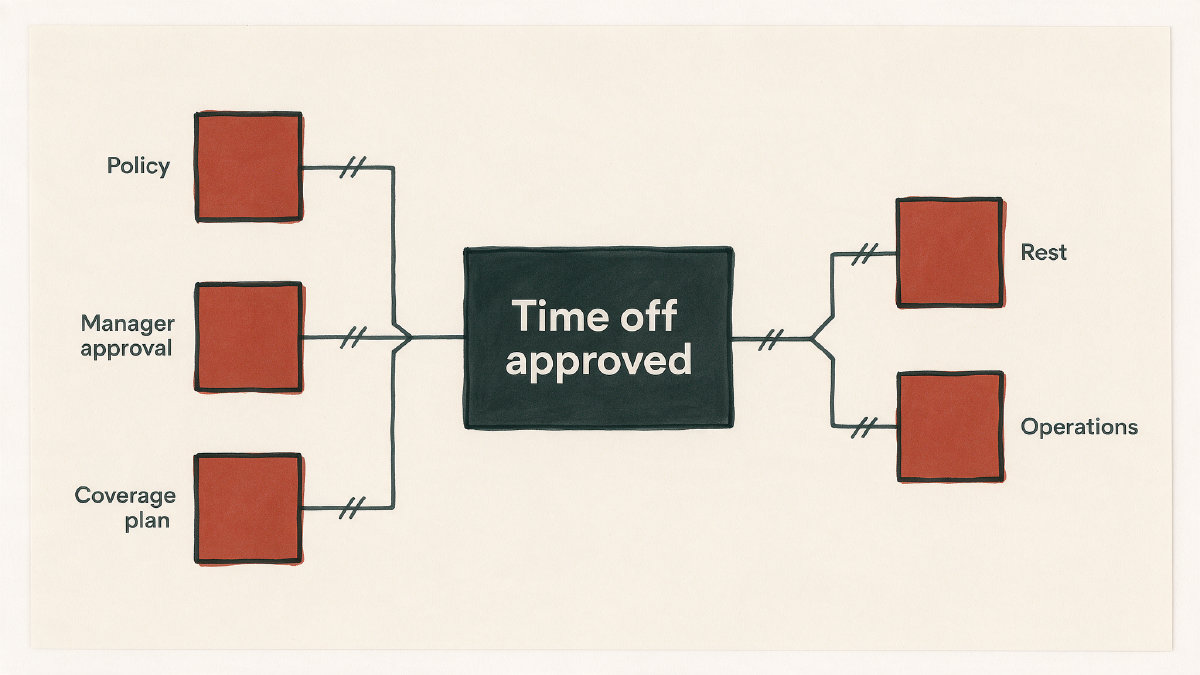
You might also find that you’re expected to be more flexible with your schedule. For example, if you’ve already requested a few days off, your manager may ask you to adjust your availability around other people’s requests. Or you might find that you’re asked to stay late or come in early during peak times (e.g., right before a product launch).
You might also find that you’re expected to cover for other people’s absences. In some companies, everyone knows who has requested their time off in advance, so if someone needs coverage, the team will try to accommodate them by shifting schedules or asking others to step up.
And finally, you might find that your manager will expect you to keep working even after you’ve taken time off. If you’ve scheduled yourself for an entire week off, your manager might ask you to come back on Monday to help out with something important, instead of giving you the full week off.
Unlimited versus traditional PTO
Traditional PTO plans typically involve a certain number of vacation, sick, and personal days that you earn each year, which you can carry over to future years if you don’t use them all. You might also have a cap on how many hours you can accrue in a given year.
Unlimited PTO plans usually eliminate these caps and formal balances. Instead of granting a fixed number of days, they set expectations around reasonable use, approval, and coverage. This makes things simpler for both employees and HR teams when leave is still recorded as needed.
However, because unlimited PTO doesn’t require tracking balances, there are a couple of differences between the two approaches:
Employees using unlimited PTO aren’t required to maintain a PTO balance. Instead, they just have to make sure they’re able to cover their company’s operations when they’re away. This could lead to situations where one person takes a lot of time off while another person works extra hours to cover for them.
Also, unlimited PTO doesn’t require you to track how many hours you’ve worked, or how many days you’ve taken off. So if you’re taking a lot of time off, your manager might not know unless you tell him.
This lack of visibility into employee usage could cause problems if managers start feeling like employees are taking too much time off. And if employees feel like their time off isn’t being tracked properly, they might start taking less time off than they would otherwise.
But these problems can be avoided if employees use unlimited PTO responsibly. To do this, employees should coordinate their time off with their managers and coworkers. They should also make sure they complete or hand off any tasks they were responsible for before they go on leave.
If you’re considering switching from accrued PTO to unlimited PTO, you should first read your company’s policy carefully. Make sure you understand the rules about requesting time off, getting approval, and coordinating with your team. Then talk to your manager about your plans for time off, and make sure you communicate with your coworkers about your schedule.
Employee benefits
Employees who use unlimited PTO responsibly tend to enjoy greater flexibility and autonomy at work. Unlimited PTO gives you the ability to take time off whenever you want, without worrying about running out of days. It also makes it easier to handle short-notice absences, such as unexpected illness or family emergencies.
There’s also less pressure to use up your accrued days every year. With unlimited PTO, you don’t have to worry about losing out on benefits if you take a break from work. Instead, you can take as much time off as you need, whenever you need it.
The biggest benefit of unlimited PTO is probably the reduced stress. When you know you can take time off whenever you want, you’re less likely to feel guilty about missing work. And since you don’t have to worry about running out of days, you’re less likely to feel pressured to work overtime or take on extra projects.
For these reasons, many employees love unlimited PTO. But it’s not for everyone. If you don’t like having to plan your time off ahead of time, unlimited PTO might not be the best fit for you. And if you’re worried about taking too much time off, unlimited PTO might not be the right choice for you either.
Employer benefits
On the employer side, unlimited PTO can reduce the administrative burden associated with managing PTO balances. Companies often spend a lot of time tracking how many hours employees have used, and making sure they don’t exceed their annual limit. Unlimited PTO eliminates this hassle.
It can also reduce the end-of-year rush. Employees who have accrued PTO balances often try to use up all their days before the end of the year, which can create a lot of stress and disruption for HR teams. Unlimited PTO eliminates this problem.
Another benefit of unlimited PTO is that it allows employees to take more time off. Since there’s no fixed annual balance, you can request the amount of time you need, subject to approval, workload, coverage, and any policy parameters. This can be especially helpful for employees who are dealing with health issues, or who have family obligations.
Potential drawbacks
But unlimited PTO can also backfire. One reason is that it creates ambiguity. If your manager doesn’t have a clear idea of how much time you’re planning to take off, he might be hesitant to approve your request. And if you’re not clear about how much time you’re planning to take off, your colleagues might think you’re slacking off.
Another reason why unlimited PTO can backfire is that it can make employees feel guilty about taking time off. If your manager sees you taking a lot of time off, he might assume you’re slacking off. And if your coworkers see you taking a lot of time off, they might assume you’re slacking off.
Finally, unlimited PTO can also create pressure to work. If your manager sees you taking a lot of time off, he might start pressuring you to work overtime. And if your coworkers see you taking a lot of time off, they might start pressuring you to work overtime.
So while unlimited PTO has its advantages, it’s important to remember that it can also create a lot of pressure and anxiety. If you’re not careful, unlimited PTO can become a source of stress rather than relief.
One reason why unlimited PTO can backfire is that it creates a lot of ambiguity. If your manager doesn’t know how much time you’re planning to take off, he might be hesitant to approve your request. And if you’re not clear about how much time you’re planning to take off, your colleagues might think you’re slacking off.
Another reason why unlimited PTO can backfire is that it can make employees feel guilty about taking time off. If your manager sees you taking a lot of time off, he might assume you’re slacking off. And if your coworkers see you taking a lot of time off, they might assume you’re slacking off.
Finally, unlimited PTO can also create pressure to work. If your manager sees you taking a lot of time off, he might start pressuring you to work overtime. And if your coworkers see you taking a lot of time off, they might start pressuring you to work overtime.
So while unlimited PTO has its advantages, it’s important to remember that it can also create a lot of pressure and anxiety. If you’re not careful, unlimited PTO can become a source of stress rather than relief.
While unlimited PTO can be beneficial for employees, it can also create some challenges for employers. One of the most obvious challenges is that it can be difficult to manage. If you don’t set clear limits on how much time employees can take off, it can be easy for people to abuse the system.
Another challenge is that unlimited PTO can make it harder to track employee usage. If you don’t have a way to track how much time employees are taking off, it can be hard to know when they’re coming back to work.
Finally, unlimited PTO can also create some legal and operational challenges. Some states have laws that require employers to provide paid time off to employees. Other states have laws that require employers to track employee usage of paid time off. And some cities have laws that require employers to provide paid time off to employees.
These laws can vary depending on where you live. So it’s important to make sure that your unlimited PTO policy complies with all applicable laws.
Sick leave and usage tracking
One of the most common misunderstandings about unlimited PTO is that it combines sick time with vacation and personal leave. In reality, it depends on the policy and where you work. Some companies include sick time in unlimited PTO; others keep legally required sick leave separate, with unlimited PTO applying mainly to vacation time.
Unlimited PTO plans usually eliminate formal caps and balances. Instead of granting a fixed number of days, they set expectations around reasonable use, approval, and coverage. This makes things simpler for both employees and HR teams when leave is still recorded as needed.
However, because unlimited PTO doesn’t require tracking balances, there are a couple of differences between the two approaches:
Employees using unlimited PTO aren’t required to maintain a PTO balance. Instead, they just have to make sure they’re able to cover their company’s operations when they’re away. This could lead to situations where one person takes a lot of time off while another person works extra hours to cover for them.
Also, unlimited PTO doesn’t require you to track how many hours you’ve worked, or how many days you’ve taken off. So if you’re taking a lot of time off, your manager might not know unless you tell him.
This lack of visibility into employee usage could cause problems if managers start feeling like employees are taking too much time off. And if employees feel like their time off isn’t being tracked properly, they might start taking less time off than they would otherwise.
But these problems can be avoided if employees use unlimited PTO responsibly. To do this, employees should coordinate their time off with their managers and coworkers. They should also make sure they complete or hand off any tasks they were responsible for before they go on leave.
If you’re considering switching from accrued PTO to unlimited PTO, you should first read your company’s policy carefully. Make sure you understand the rules about requesting time off, getting approval, and coordinating with your team. Then talk to your manager about your plans for time off, and make sure you communicate with your coworkers about your schedule.
Payout when leaving
Separation payout is a complicated topic. There are lots of different ways that companies handle separation payout, and it depends on the company’s policies and procedures. Whether employees are paid for unused PTO when they leave depends on state law, employment agreements, and company policy. In places that treat accrued vacation or PTO as earned wages, that balance often must be paid out at separation.
A company may choose to pay unused PTO where the law does not require it, but in some states payout is required for accrued, unused vacation or PTO at termination, whether the departure is voluntary or involuntary. The amount depends on the employee’s vested balance and the applicable rules.
Companies might also give employees money for unused PTO when they leave because they want to encourage employees to take time off. If you give employees money for unused PTO when they leave, they might be more likely to take time off, which could improve your company’s productivity and morale.
However, companies might also give employees money for unused PTO when they leave because they want to avoid potential lawsuits. If employees take a lot of time off, they might be able to sue the company for lost wages. Giving employees money for unused PTO when they leave could help prevent that.
Ultimately, whether or not a company gives employees money for unused PTO when they leave depends on the company’s policies and procedures. Some companies choose to give employees money for unused PTO when they leave, while others choose not to.
If you’re wondering whether your company pays unused PTO when employees leave, check the policy, your employment agreement, and your state’s wage rules—or ask HR. If you’re leaving with an accrued balance, that review will tell you whether payout is required in your situation.
Policy guardrails
Unlimited PTO is a great benefit for employees, but it requires some management. Here are some practical guardrails that can make an unlimited PTO policy usable and fair:
First, you should define the purpose of your unlimited PTO policy. What does it mean for your company? Do you want it to be a way to reward good performance? Or do you want it to be a way to increase retention?
Second, you should determine who is eligible for unlimited PTO. Is it available to everyone? Or is it only available to certain types of employees?
Third, you should establish a workflow for requesting time off. How will employees request time off? Will they have to fill out a form? Will they have to contact their manager?
Fourth, you should establish standards for approving time off requests. Who will approve time off requests? What criteria will they use to decide whether to approve a request?
Fifth, you should establish limits on how much time employees can take off. Should there be a cap on how much time employees can take off? If so, what should that cap be?
Sixth, you should establish requirements for covering for other employees’ absences. If an employee takes time off, who will cover for them? How will you ensure that employees have coverage when they take time off?
Seventh, you should establish minimum amounts of time employees should take off. Should employees be encouraged to take a certain amount of time off? If so, what should that minimum be?
Eighth, you should train managers on how to handle unlimited PTO. Managers will need to know how to approve time off requests, and how to cover for other employees’ absences.
Ninth, you should keep records of employees’ time off. This will help you track how much time employees are taking off, and how much time they’re being covered for.
Tenth, you should coordinate with other benefits. If you offer other benefits, like healthcare or retirement plans, you should make sure that unlimited PTO doesn’t interfere with those benefits.
Eleventh, you should consider existing balances. If employees have existing balances of PTO, you should decide how to handle those balances.
Twelfth, you should review your unlimited PTO policy regularly. As your company grows and changes, your unlimited PTO policy may need to change as well.
Switching from accrued PTO to unlimited PTO is a big change for an organization. It affects everything from HR systems to payroll processes, and it requires a lot of communication and training.
To make the transition smooth, organizations should start by defining their business rationale for moving to unlimited PTO. Why do they want to switch? What are the benefits they hope to gain? What are the risks they’re trying to mitigate?
Once they’ve defined their business rationale, they should move on to designing the new policy. This includes determining eligibility, setting parameters, and establishing workflows. They should also consider how the new policy will interact with other benefits, like healthcare and retirement plans.
Next, they should update their HR systems to reflect the new policy. This includes updating HRIS systems, payroll systems, and other HR tools. They should also make sure that all employees are aware of the new policy.
Then, they should communicate the new policy to all employees. This includes sending out emails, holding meetings, and posting updates on internal portals. They should also make sure that all employees understand how the new policy will affect their work.
Finally, they should test the new policy to make sure it’s working as intended. This includes monitoring usage metrics, gathering feedback from employees, and making adjustments as needed.
Switching to unlimited PTO is a complex process, but it can be done successfully with proper planning and execution.
Whether or not unlimited PTO is right for your company depends on several factors. First, it depends on your role design. If you have a highly scheduled role, unlimited PTO might not be the best fit for you. Manual jobs, for example, often require strict scheduling.
Second, it depends on your staffing. If you have tight staffing, unlimited PTO might not be the best fit for you. You’ll need to make sure that you have enough people to cover for your absence.
Third, it depends on your workplace culture. If your workplace culture is one where people don’t take much time off, unlimited PTO might not be the best fit for you.
Fourth, it depends on your manager capability. If your manager isn’t capable of handling unlimited PTO, it might not be the best fit for you.
Fifth, it depends on your legal setting. If your company is in a state or city where sick-leave, payout, or recordkeeping rules make unlimited PTO difficult to administer, it might not be the best fit for you.
Finally, it depends on your coverage feasibility. If you don’t have the resources to cover for your absence, unlimited PTO might not be the best fit for you.
Negotiated trade-offs are also possible. You might agree to take fewer days of PTO in exchange for more flexibility. Or you might agree to take more days of PTO in exchange for a higher salary.
Ultimately, whether or not unlimited PTO is right for you depends on your individual circumstances. If you’re unsure whether unlimited PTO is right for you, you should talk to your manager about it.